VMPL
New Delhi [India], October 8: There’s an agency for the brand. Another for social. One for digital. One for influencers. A PR firm. A production house. A web partner. And, when the brief calls for a famous face, potentially another team handling celebrity talent.
Individually, everyone knows their job.
Collectively? That’s where things can get interesting.
The branding agency has one interpretation of the brand. The social team has another. The influencer campaign develops its own tone. The celebrity partnership arrives with an entirely different personality.
And suddenly, the brand manager has acquired an unofficial second job: creative air-traffic controller.
It’s an increasingly familiar problem in a marketing world where brands are expected to show up everywhere, all at once, without ever looking like they have multiple personalities.
For a business choosing a branding agency in Mumbai, the challenge therefore extends beyond finding a team that can create a compelling identity. It also means ensuring that identity survives its journey through social content, creator collaborations, websites and every other customer touchpoint.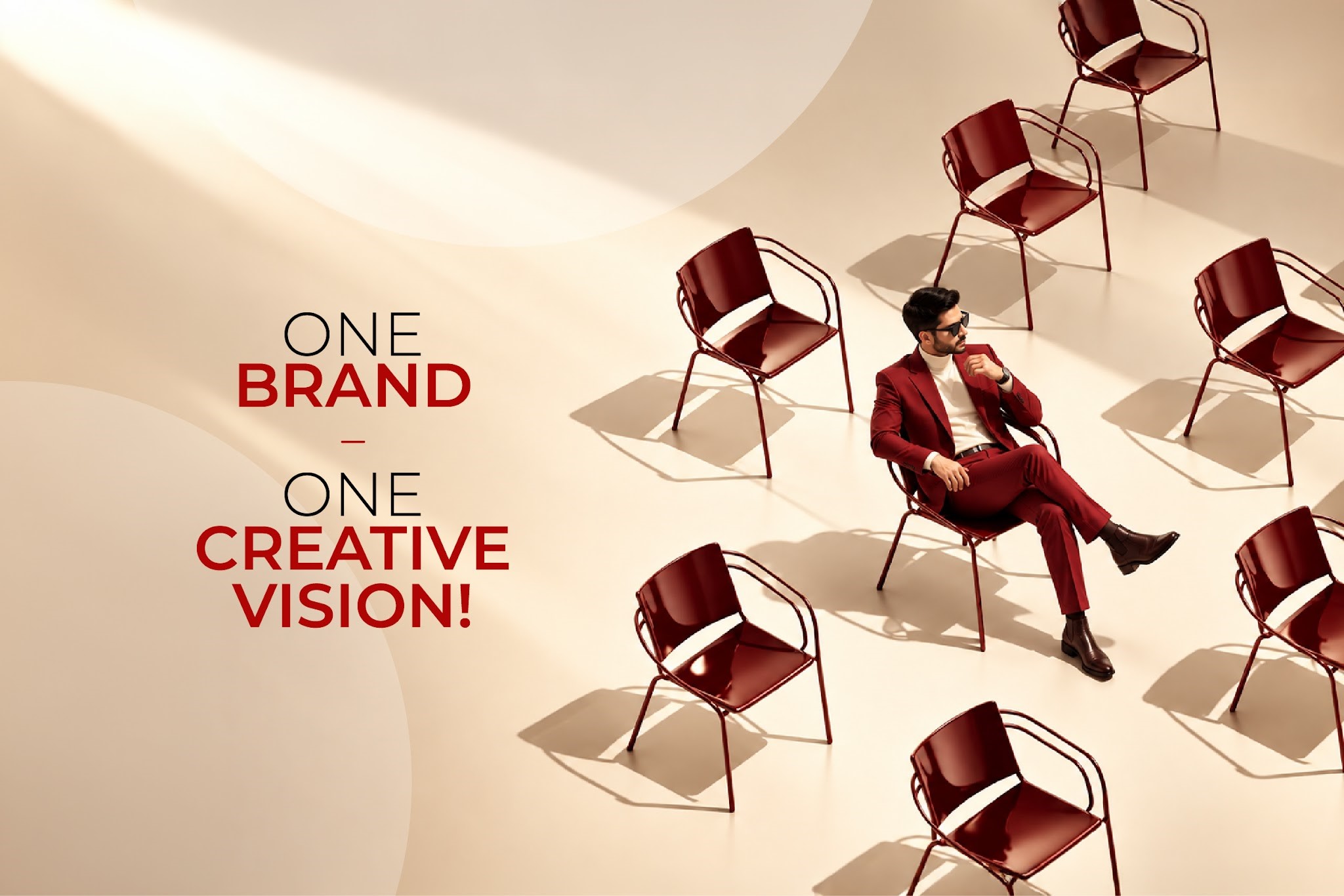
Which perhaps explains why the idea of the integrated creative partner is finding fresh relevance.
One agency betting on that model is Pune-based House of Hues.
Rather than choosing a single creative lane, the agency has been building across them, bringing branding, social media, digital, influencer marketing, celebrity endorsements, packaging, websites, PR, print and design under one creative ecosystem.
That sounds suspiciously like the old “360-degree agency” pitch.
Co-founder Vijay Chotrani argues there’s an important difference.
“The value isn't in saying we do ten things. The value is in understanding how those ten things should work together for one brand.”
And that distinction matters.
Because the modern campaign has developed a habit of refusing to remain a campaign.
A brand film becomes a Reel. A Reel becomes a creator conversation. A creator collaboration leads to PR. A celebrity association travels onto outdoor. The campaign lands on a website, gets chopped into content and, if things go particularly well, becomes part of culture.
The customer, of course, sees only one brand.
They don't particularly care that six different agencies were copied on the email.
For businesses evaluating a branding company in Mumbai, this makes continuity a useful measure of capability: can the creative idea remain recognisable as it moves between teams, platforms and formats?
That creates an interesting tension for the agency business.
Specialisation has been one of advertising's defining trends. Smaller, sharper agencies have emerged around individual disciplines, promising deeper expertise than the sprawling network model.
And there's a good reason for it. Specialists can bring expertise, speed and cultural fluency that larger organisations sometimes struggle to replicate.
But specialisation creates another question:
Who is watching the whole brand?
“The problem isn't that specialists aren't valuable. They absolutely are,” says Chotrani. “The problem begins when nobody is responsible for the larger creative picture.”
House of Hues is positioning itself as an answer to that problem.
Not by arguing that every specialist needs to disappear, but by putting the central creative idea back at the centre and allowing different disciplines to grow from it rather than meet awkwardly somewhere downstream.
It's a subtle difference, but potentially an important one.
It also adds another dimension to what businesses should look for when searching for the best branding agency in Pune. Beyond a strong portfolio, the question is how an agency helps a brand maintain a clear voice as its marketing becomes more complex.
For House of Hues, that is the opportunity: connecting creative capabilities around a shared understanding of the brand.
For years, agencies have been told to find their niche.
House of Hues appears to be asking whether the next opportunity might lie in doing precisely the opposite: connecting the niches.
Because perhaps the future isn't about having fewer specialists.
It's about needing fewer people to explain to the specialists what everyone else is doing.
(ADVERTORIAL DISCLAIMER: The above press release has been provided by VMPL. ANI will not be responsible in any way for the content of the same)