PNN
New Delhi [India], October 27: S. E. Sudheendra, Chairman of the Karnataka State Bioenergy Development Board, Government of Karnataka, met Evo Stoyanov Kafedzhiev, Head of Trade and Economic Affairs of the Republic of Bulgaria, at the Embassy of the Republic of Bulgaria in Chanakyapuri, New Delhi today. The high-level meeting was convened to explore avenues for bilateral collaboration in bioenergy, renewable energy, green technologies, and sustainable energy development. The meeting was also attended by Sanjay Gaba and Akram.
During the discussions, Ayub Khan, Chairman of the Karnataka Exhibition Authority, Mysore, extended a formal invitation to Nikolay to visit Mysore with a delegation during their upcoming itinerary to Bangalore for the planned trade meetings, highlighting the region’s cultural heritage and commercial exhibition potential.
The Delhi meeting focused closely on Karnataka’s bioenergy development initiatives, the progress achieved in the renewable energy sector, and the diverse applications of biofuels in energy production and consumption. The dignitaries also exchanged views on energy-related projects being implemented in the Republic of Bulgaria, innovative technologies for sustainable energy development, and environmentally friendly alternatives to conventional fuels.
Karnataka’s Bioenergy Potential and Opportunities for Bilateral Cooperation
During the interaction, S. E. Sudheendra outlined the initiatives undertaken by the Government of Karnataka and the board to harness the State’s vast bioenergy potential for strengthening the rural economy, adding value to agricultural and organic waste, generating employment, and promoting environmentally sustainable development.
He emphasised that Karnataka is keen to establish mutually beneficial partnerships with Bulgaria in bioenergy development, technology transfer, investment, research and industrial collaboration. He highlighted the importance of international cooperation in accelerating the commercialisation of bioenergy technologies and developing an integrated value chain encompassing feedstock collection, processing, fuel production, distribution and end-use applications.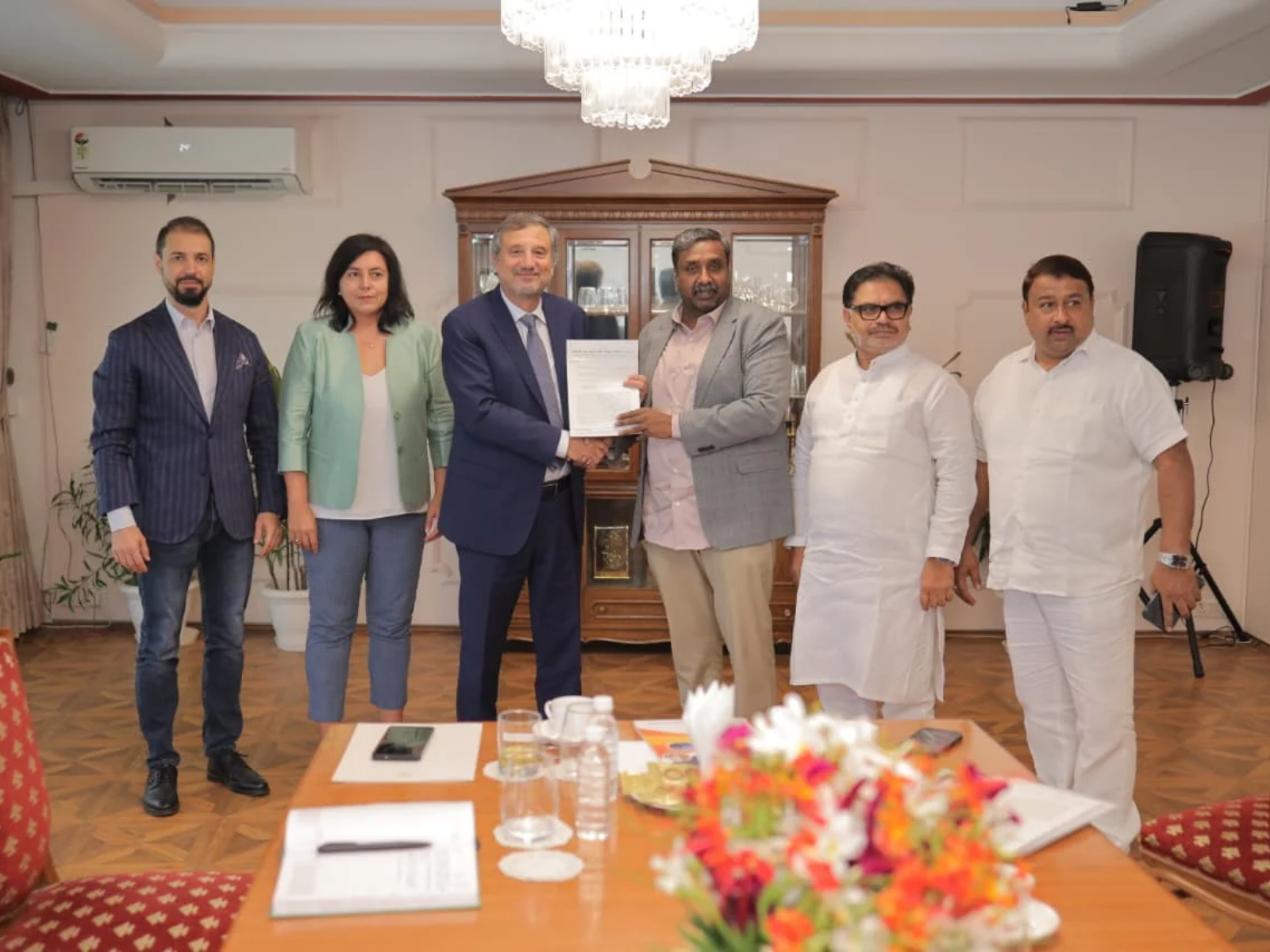
The proposed areas of cooperation include biodiesel production from non-edible oilseeds and used cooking oil; compressed biogas (CBG); biogas and Bio-CNG; biomass briquettes and pellets; sustainable aviation fuel (SAF); green hydrogen; advanced biofuels; and waste-to-energy technologies. The board has identified several potential areas for collaboration with Bulgarian government agencies, research institutions, universities, technology providers and private-sector industries. These include the conversion of agricultural residues into biomass-based energy products, biofuel production, biogas purification, improvements in production efficiency, reduction of pollutant emissions, technology transfer and joint research in advanced renewable energy technologies.
Shri Sudheendra also highlighted the importance of supporting the State’s efforts to accelerate biomass-based biofuel production through the implementation of a progressive biofuel policy. He referred to initiatives aimed at promoting energy self-reliance at the Gram Panchayat level under the Swachh Bharat Mission, along with programmes supporting rural development and sustainable waste management.
The dignitaries shared the view that international knowledge exchange, technology transfer and institutional cooperation are essential to addressing the global challenges of climate change, reducing carbon emissions and developing sustainable energy systems.
Karnataka has substantial potential for bioenergy development, with an estimated 15 million metric tonnes of biomass available from various renewable feedstocks, including agricultural residues, animal waste, urban organic waste and used cooking oil.
S. E. Sudheendra explained that the effective utilisation of these resources could create new economic opportunities across the bioenergy value chain while supporting rural livelihoods, improving resource efficiency and reducing the environmental impact of waste disposal. A special emphasis was placed on the development of sustainable ecosystems.
(ADVERTORIAL DISCLAIMER: The above press release has been provided by PNN. ANI will not be responsible in any way for the content of the same.)